Events & Opportunities
| Find in-person and virtual opportunities including global fellowships and workshops, learning calls, events, self-guided courses, and other programs to develop your leadership. |
Breadcrumb
- Home
- Events & Opportunities
November
November 17, 2026
Estimated time commitment: 60 minutes
The PISA 2025 results have made headlines globally. 760,000 students in 91 countries took the science, maths and reading tests, representing 33 million 15-year-olds worldwide. Data shows:
- Education performance continues to decline globally, with huge drops in reading
- AI use is having a negative impact on learning for most students, although not for all
- Student sense of belonging at school is improving in most countries
- Over half of students may be vulnerable to misinformation and disinformation
But how do we make sense of these findings for our own context? Why are some countries making progress while others are falling behind? And what can education leaders learn from both?
In this workshop, you’ll hear four education leaders explore these questions live and unfiltered, and share their perspectives on the latest PISA findings. Together, we’ll challenge common interpretations and explore what the results mean for our efforts to improve learning for all.
This opportunity will be held in English, with interpretation and/or translation to Spanish. If you need live interpretation of the experience and/or translation of materials in additional languages to support your engagement, please indicate this via the registration/application form. We welcome all requests and will work to provide appropriate language support measures. However, please understand that we may not be able to accommodate all requests.
Register in English or Spanish - Español.
Deadline
Nov 17
People First Talk with Anshu Gupta: Dignity, Community Agency, and Local Change
November 18, 2026
Estimated time commitment: 60 minutes
What changes when people are trusted to define their priorities and act on them?
Join the People First Community on November 18th at 10:00am ET for a conversation with Anshu Gupta, founder of Goonj and Gram Swabhimaan. For more than 25 years, Anshu has worked with communities across India to recognize and develop local leadership, agency, and dignity as resources for change.
Drawing on Goonj’s Cloth for Work approach and Gram Swabhimaan, we will explore how communities organize around their own priorities, what helps people develop a stronger sense of agency, and how we can support their leadership development as a path to change in systems.
Please register here.
November 18, 2026
Estimated time commitment: 60 minutes
Why would three villages ask for a wrestling ground before a road? In remote villages in Jammu and Kashmir, Anshu Gupta’s team expected people to ask for a road. Instead, villagers chose a wrestling ground for young people and a local sporting tradition. Their choice challenged the team’s assumptions.
Join us on November 18 for a People First Talk with Anshu, founder of Goonj and Gram Swabhimaan, on dignity, local knowledge and how communities organize around priorities they identify. With Kassaga Arinaitwe, he will explore lessons for educators, alumni and others working with communities.
During this People First Talk we will:
- Explore how communities can identify their own priorities, mobilize local knowledge and resources, and work together to address challenges, drawing on Anshu Gupta's experience with Goonj and Gram Swabhimaan.
- Understand how dignity, self-worth, trust, and shared decision-making can strengthen people's agency and capacity to lead change collectively.
- Reflect on what educators, community leaders, and development practitioners can do differently to support locally led change, including how to ensure community voices shape decisions and how to sustain progress over time.
This call will take place o Wednesday, November 18 | 10:00 am EST | 3:00 pm GMT | 6:00 pm EAT | 8:30 pm IST
Register here.
November 24, 2026
Estimated time commitment: 60 minutes
The recent PISA 2025 results give us a window into how education systems around the world are performing and what it will take to change the trajectory of outcomes for the better. They’ve also generated new insights into how to understand the role of AI and technology in the future of education.
In this Better Future Conversation, Wendy Kopp and Andreas Schleicher will unpack what we can learn from the latest findings.
Format: 60 minutes via Zoom
Date: November 24, 2026
Time: 3:00pm UTC / 10:00am EST
This opportunity will be held in English, with interpretation and/or translation to Spanish and Portuguese. If you need live interpretation of the experience and/or translation of materials in additional languages to support your engagement, please indicate this via the registration/application form. We welcome all requests and will work to provide appropriate language support measures. However, please understand that we may not be able to accommodate all requests.
Register here to save your seat for the live conversation.
November 24, 2026
Estimated time commitment: 60 minutes
Join us to learn from Antarang Foundation’s work with high schools across India and how career readiness education can develop progressively across the high school years, building on students’ learning and experiences. Priyanka will share practical examples from this work and lessons on how schools can approach career readiness as a continuing part of students’ education, with opportunities for students to develop their understanding of careers and make informed decisions about their futures.
During this call you will:
- Learn from practical examples of how schools and career readiness organizations work together to bring career topics into what students learn.
- Understand how career readiness can develop from one grade to the next, building on students’ learning and experiences.
- Explore ideas that participants can adapt for high schools in their own contexts.
This call will take place on Tuesday 24 November 2026, GMT from 2:00 pm – 3:00 pm and will be held in English with Spanish interpretation available.
Register here.
Pagination
Introducción a la educación de las niñas
Esta introducción a la educación de las niñas es tu puerta de entrada a una mayor exploración de este tema fundamental. Este breve curso profundizará tu comprensión sobre los temas clave en materia de educación de las niñas y equidad de género, y te permitirá probar nuevas formas de trabajar para mejorar la educación de las niñas en tu comunidad y aula.
Completa este curso y obtén el certificado si deseas participar en la Fellowship Global de Educación de las Niñas.
Visita la página web de la iniciativa Educación de las niñas para conocer más.
Este curso está ahora disponible en Sistema de Gestión de Aprendizaje Teach For All: lms.teachforall.org
Para acceder al curso:
- Crea una cuenta
- Después de crear tu cuenta, puedes inscribirte en el curso "Introducción a la educación de las niñas" (English | español) desde el catálogo en cualquier momento.
Si tienes alguna pregunta, por favor comunícate a @email y te responderemos lo antes posible.
Introduction to Girls' Education
The course introduces participants to fundamental concepts, issues, and challenges in girls' education globally. It covers key topics including access, safety, reproductive health, gender norms, the role of boys and men, and girls' leadership. This course is open to network partner staff and others outside of the network and is a prerequisite to the Global Girls Education Fellowship.
Completing this course and earning the certificate is mandatory if you want to participate in the Global Girls Education Fellowship.
Visit Girls' Education Initiative webpage to learn more.
This course is now available on the Teach For All Learning Management System: lms.teachforall.org
To access the course:
- Create an account
- After your account is created, you can enroll to the "Introduction to Girls' Education" (English | español) course from the catalog at any time.
If you have any questions, please reach out to @email, and we will get back to you at the earliest.
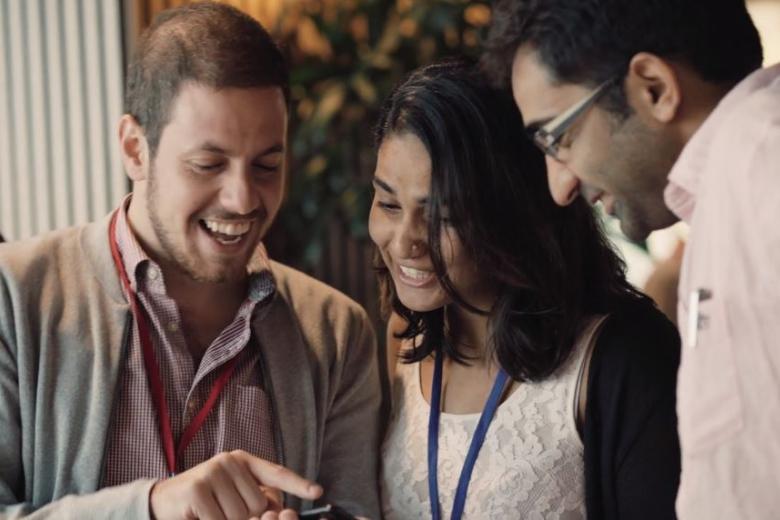
The course introduces participants to fundamental concepts, issues, and challenges in girls' education globally. It covers key topics including access, safety, reproductive health, gender norms, the role of boys and men, and girls' leadership. This course is open to network partner staff and others outside of the network and is a prerequisite to the Global Girls Education Fellowship.
Completing this course and earning the certificate is mandatory if you want to participate in the Global Girls Education Fellowship.
Visit Girls' Education Initiative webpage to learn more.
This course is now available on the Teach For All Learning Management System: lms.teachforall.org
To access the course:
- Create an account
- After your account is created, you can enroll to the "Introduction to Girls' Education" (English | español) course from the catalog at any time.
If you have any questions, please reach out to @email, and we will get back to you at the earliest.
Pedagogía Basada en la Cultura
A lo largo de este curso autodidacta, aprenderás sobre pedagogía basada en la cultura y su práctica: ¿Qué es? ¿Cómo se ve, suena y se siente en el aula? ¿Cómo se puede fomentar en las salas de clases?
El aprendizaje se basará tanto en estudios de casos en aulas en diversas partes del mundo como en investigación educativa. Tendrás la oportunidad de analizar y reflexionar sobre lo que vas aprendiendo a través de nuestras observaciones de aulas y de tus compañeros.
Este curso autodidacta está diseñado para realizarse 4-6 horas. Recomendamos dedicarle entre 1 a 2 horas por semana durante un período de tres semanas.
Este curso está ahora disponible en Sistema de Gestión de Aprendizaje Teach For All: lms.teachforall.org
Para acceder al curso:
- Crea una cuenta
- Después de crear tu cuenta, puedes inscribirte en el curso "Pedagogía Basada en la Cultura" (English | español) desde el catálogo en cualquier momento.
Si tienes alguna pregunta, por favor comunícate a @email y te responderemos lo antes posible.
التعليم الشامل - دورة افتراضية (Inclusive Education Virtual Course)
تغطي هذه الدورة أساسيات مفاهيم التعليم الشامل، والتطورات التاريخية في هذا المجال، بالإضافة إلى أمثلة من مختلف أنحاء العالم حول كيفية قيام قادة التعليم في جميع أنحاء العالم بإنشاء بيئات تعليمية لتلبية احتياجات جميع الطلاب.
This course is now available on the Teach For All Learning Management System: lms.teachforall.org
To access the course:
- Create an account
- After your account is created, you can enroll to the "Inclusive Education Virtual Course" (English | español | العربية) course from the catalog at any time.
If you have any questions, please reach out to @email, and we will get back to you at the earliest.
Pagination
Share An Opportunity With Us!
Send us opportunities, resources or stories of cross-border that you think might be of interest for network teachers and alumni.
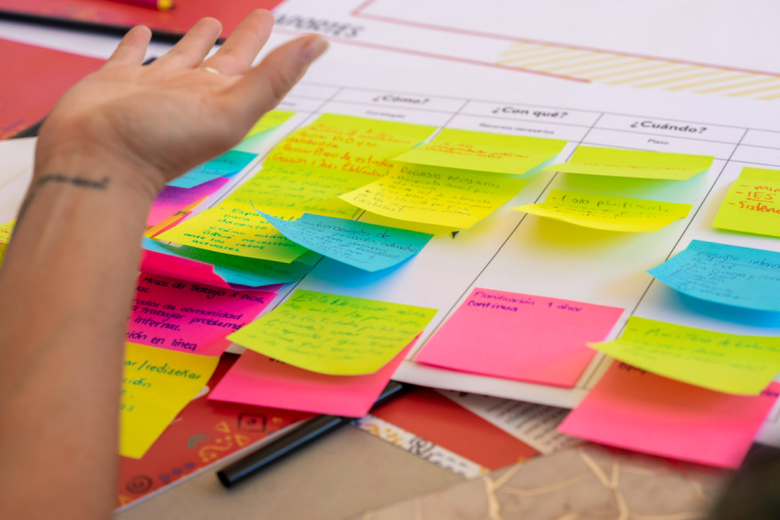
Learning & Insights Hub
Explore our free, public collection of 800+ resources and tools developed and curated by practitioners across the Teach For All network on teaching practices and key focus areas, including: Inclusive Education, Teaching As Collective Leadership, Education in Emergencies, Community Impact Lab, Climate Education and Leadership, Future of Work, and Girls’ Education.