Voices from the ecosystem: Co-creating policy from classrooms to ministries
Across Europe, educational systems face complex, systemic pressures: teacher shortages, rising attrition, uneven access to digital learning environments. While high-level policy frameworks attempt to steer these challenges, the distance between where a policy is written and where it is lived in the classroom can feel vast.
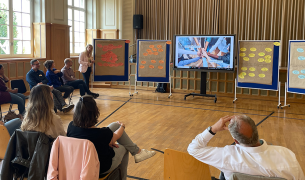
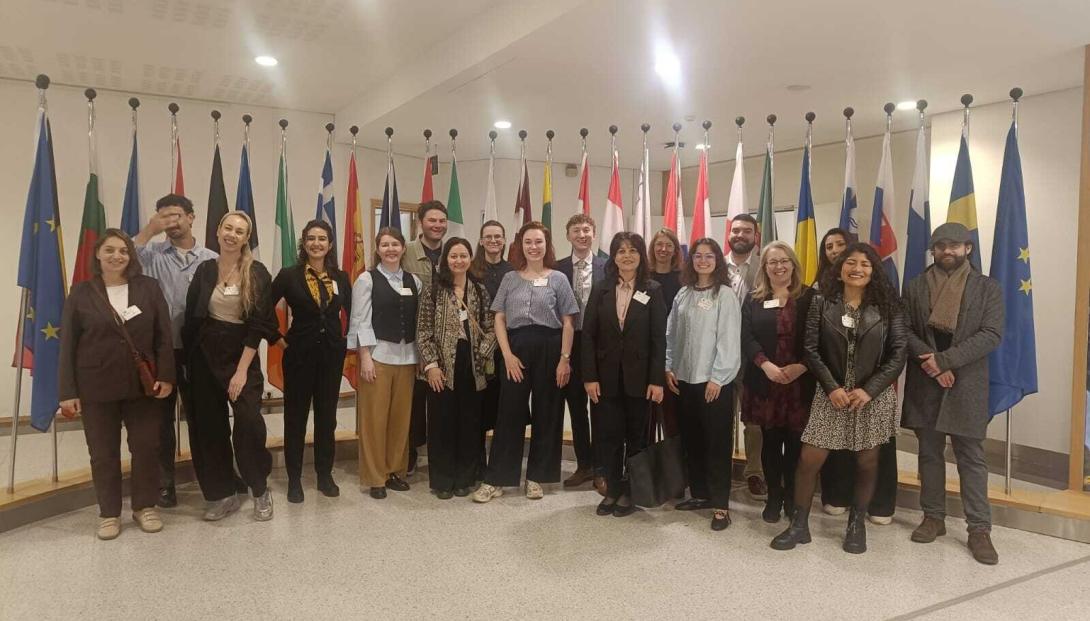
To bridge this gap, members of the Europe Alumni Policy & Practice Community—41 alumni representing 16 Teach For All partner organizations—engaged in virtual sprint cycles that culminated in an in-person Policy Lab in Brussels in April 2026. Their collaboration yielded three newly released policy briefs designed to tackle critical European challenges:
- Enhancing Teacher Wellbeing & Teaching Quality
- Reducing Teacher Attrition
- Achieving Digital Equity & Closing the Digital Divide
What makes this initiative distinct is not just the topics addressed, but how these policy briefs were put together. Rather than relying solely on traditional top-down policymaking, the community brings together a cross-sector group of alumni of Teach For All partner organizations in Europe—from classroom teachers and school principals to national agency advisors and government ministry leaders.
The Multi-Angle Approach: Why Ecosystem Thinking Matters
Policy failure often stems from an "implementation gap"—the friction that occurs when high-level legislative intent meets on-the-ground operational realities. By intentionally mixing formal policy professionals with practitioners and civil society leaders, the community approaches systemic challenges from every angle of the system.
1. The View from Ministries and National Agencies
Those working within government offer crucial insight into political realities, legislative timelines, and structural design.
- Tom Seddon (Head of Legislative Strategy, Department for Education, UK, and Teach First alumnus '17): Drawing on his experience balancing legislative reform with teacher retention and special educational needs, Tom highlights the complexity of political compromise: "Legislation is useful, but isn’t the answer to everything! What are the other ways to achieve your policy ambitions?"
- Rūta Kuodienė (Advisor to the Director, National Agency for Education, Lithuania, and Renkuosi mokyti! alumna '11): Working on national curriculum updates and student assessment alignment, Rūta grounds policy in patience and long-term execution: "Changes in education come slowly; it takes patience to wait for them."
- Aoife Bríd Shortt (Policy Assistant, Directorate-General for Education, Youth, Sport and Culture, European Commission, and Teach For Austria alumna '22): Supporting the upcoming EU Teachers and Trainers Agenda, Aoife emphasizes broad inclusion: "We need more teacher voices in policy-making, as well as cooperation with trade unions and ministries of education."
2. The View from School Leadership and the Classroom
Practitioners translate high-level guidelines into daily routines, ensuring that proposed solutions are human-centered, realistic, and operationally viable.
- Agnė Motiejūnė (Deputy Principal, Vilnius Antakalnis Progymnasium, Lithuania and Renkuosi mokyti! alumna '17): Focused on inclusive education and positive behavioral interventions, Agnė stresses community trust over isolation: "Real school change doesn't happen in isolation... a strong, engaged community is the most powerful tool we have."
- Pantelis Pavlakidis (Principal, Quinoa School Berlin, Germany, and Teach First Deutschland alumnus '12): Tackling educational inequality in underserved communities, Pantelis views policy through an equity lens—such as ethical AI adoption: "I’m particularly interested in how AI can be used to reduce educational inequality, especially for learners from less affluent backgrounds."
- Lindsay Patience (Teacher & Co-founder of Flexible Teacher Talent, UK, and Teach First alumna '06): Championing flexible working and maternity rights to curb attrition, Lindsay brings practitioner advocacy into systemic spaces: "We campaigned to change the legislation for teachers’ pay for those working flexibly - required persistence, confidence, collaboration."
3. The View from Civil Society and Ecosystem Partners
NGO founders and social sector innovators test agile approaches, pilot new interventions, and push systems toward inclusion.
- Ivan Gospodinov (Founder/Chair, Education Without Backpacks, Bulgaria, and Teach For Bulgaria alumnus '14): Focusing on national digital platforms, Ivan identifies system bottlenecks in practice: "Bulgarian teachers have a lot of digital skills, but the system does not let them apply them on day to day basis."
- Anastasiia Luzhetska (Co-founder, NGO Bezpechnyy, Ukraine, and Teach For Ukraine alumna '21): Advocating for digital safety and child rights in crisis environments, Anastasiia reflects on structural resilience: "Digital safety is not just a technical skill, but a fundamental child right that must be integrated into the core of educational policy."
To ensure these working groups moved beyond discussion and produced actionable knowledge tools, the Europe Policy & Practice Community worked in small groups, each developing policy briefs on their topic while learning from one another across contexts.
What systemic "knot" or policy translation gap is your school, organization, or ministry currently trying to unpick?